Who We Are
Welcome to the Who We Are page. Here you can learn more about the team working behind the scenes to make this site possible.
Founder of Site
Dr. Stephanie Jones
Educator/Speaker/Consultant
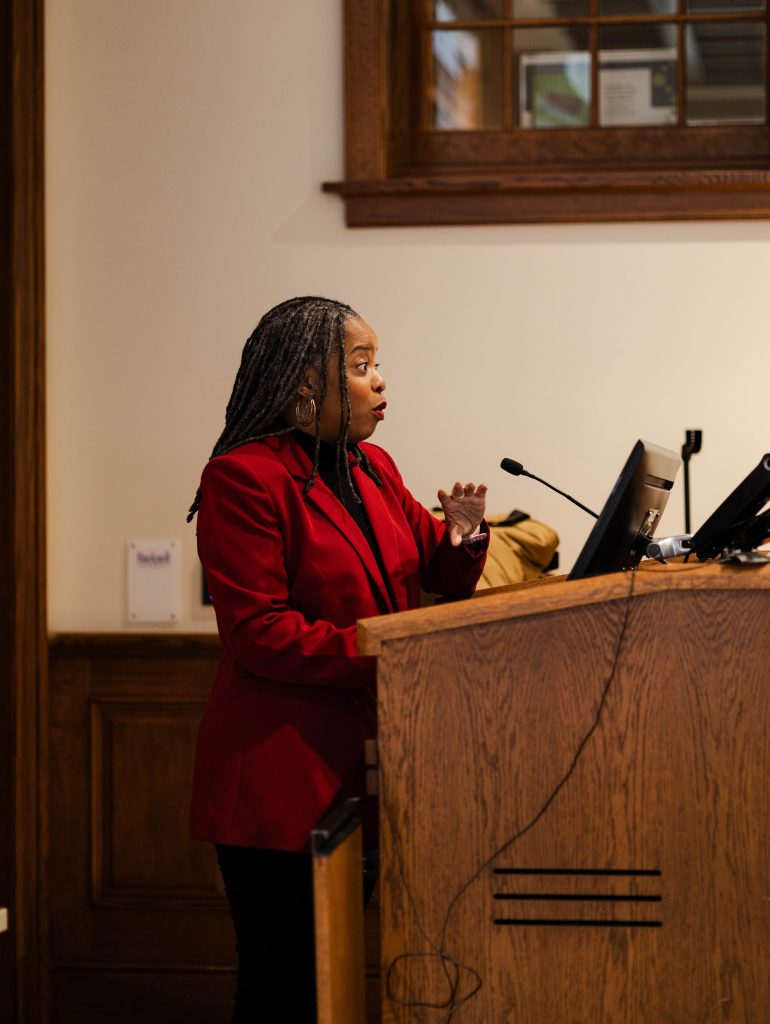
Dr. Jones giving a discussion
Dr. Jones is an Associate Professor for Education at Grinnell College where she teaches courses in youth culture, young adult literature and Introduction to Educational Studies. She has focused on doing research that examines Black women’s literacy practices and exploring racialized trauma in school curriculums.
Before Grinnell she spent six years teaching in Atlanta Public Schools, Dr. Jones transitioned to graduate studies at the University of Georgia with the support of SREB Doctoral Scholars of Color fellowship. She is part of the inaugural cohort of Associated Colleges of the Midwest Mellon Faculty Fellows and was awarded the STAR fellowship through the Literacy Research Association.
Since 2017, Dr. Jones has been collecting information from classroom stories of racialized trauma that connect to the Black community. She finds sources like news articles or videos detailing what the student’s negative experience was at school. She would upload the incident onto a Facebook page, gathering information of a large trend among the U.S schools.
This work led to her project, “Mapping Racial Trauma”, which seeks to understand and explore racialized trauma and curriculum violence within schools K-12 across the United States. Schools like private, public, parochial and higher education institutions are reporting racist incidents that include curriculum violence, physical, racially offensive acts, verbal or written racialized comments, threats, or intimidation.
The Mapping Racial Trauma project visually maps out the incidents using ArcGIS software, so students, parents, educators, and communities can see where and how frequently these incidents occur. This visual approach of the map helps shift racial trauma from isolated experiences to collective, systemic realities that demand accountability and action. The platform serves as both an educational resource and a call to action, advocate for change, recognize trends and push schools and districts to address institutional failures that can compromise student safety and learning. The project has notably aspired to mitigate trauma in public schools, encouraging accountability and showing a visual demand for better training for educators, anti-racist curriculum, and more.
Vivero Fellow
The Vivero Digital Fellows Program is a training and mentorship program that seeks to grow the diversity of the digital liberal arts community at Grinnell and beyond. It was launched in summer 2017 with the support of an Innovation Fund Pilot Program grant. Vivero is currently a joint effort supported by the Digital Liberal Arts Collaborative and the Libraries.
Tierney Steelberg
Tierney Steelberg is a Digital Liberal Arts Specialist and co-lead of the Vivero Digital Fellows program at Grinnell College, supporting students, faculty, and staff in their work on digital projects. She first started working with the project in 2021. She supports the back-end of the website and the administration of project data and maps in ArcGIS Online.
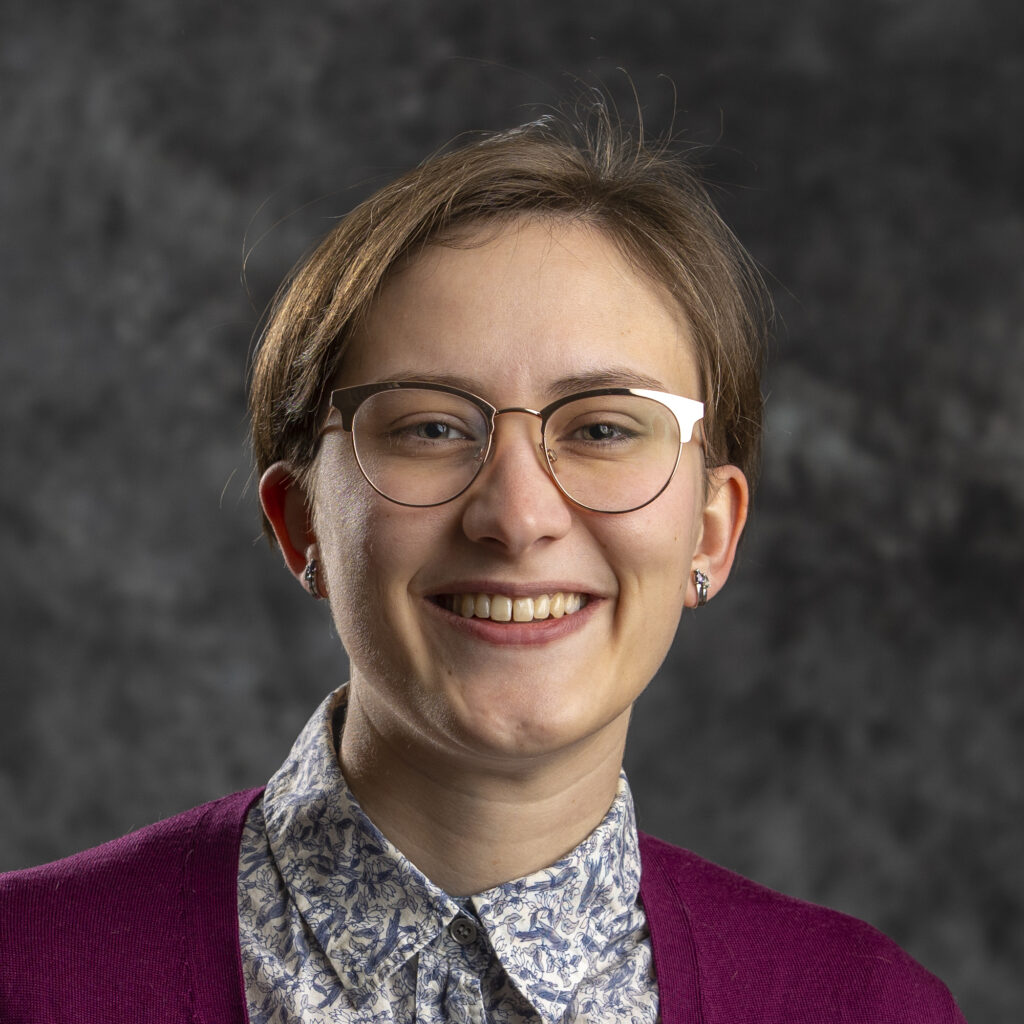
Feven Adane Getachew '24
Feven Adane Getachew worked with Vivero Fellows from 2021-2024. During her time there she has worked alongside Dr. Jones on Mapping Racial Trauma where she utilized digital tools to create video, mapping, and online exhibition of the data. Her digital toolkit – which includes ArcGIS and WordPress – helps her code and build interactive maps online using data extracted from students experience. Feven is interested in pharmaceutical chemistry and medical sociology. While she is fascinated by the science of drug synthesis, she wants to understand how socio-political and economic structures affect access and availability of quality of these drugs. Being a Vivero Fellow gave her the opportunity to lean and practice how to use digital tools and connect with professors to assist in interesting research projects.
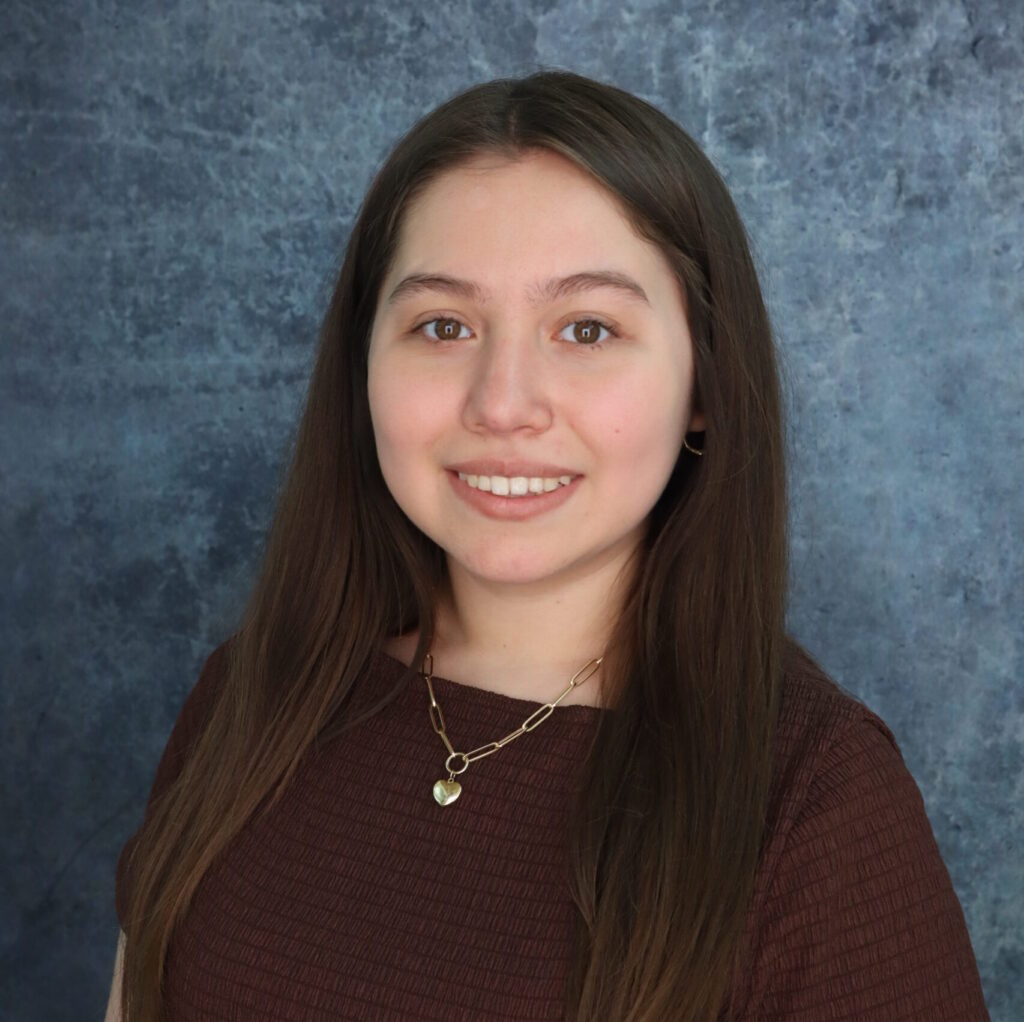
Karolina Calleros '26
Karolina Calleros worked with Vivero Fellows from 2024-2026. She began working with Dr. Jones on Mapping Racial Trauma in School on Fall 2025 where she utilized digital tools to continue mapping, and online exhibition of the data. Her digital toolkit includes ArcGIS and WordPress, applied to this project specifically through the new “Who we are” and “User Guide” pages on this site. “Who we are” lets the audience know more about site and where the data comes from. “User Guide” is helpful if new users have any questions or concerns on how to manage the site; they will have the sources to know how to use it. Karolina is passionate about marketing and advocacy work. Working for Vivero on digital projects has helped her develop new skills where, coupled with her Mexican-American identity, she can help empower minority groups and amplify their voices, bringing greater awareness to their experiences, perspectives, and issues.
DASIL
Grinnell’s Data Analysis and Social Inquiry Lab (DASIL) helps students and faculty members integrate data analysis into research and classroom work. In addition to software training and data-set preparation, the lab also provides experiential learning for student tutors; facilitates faculty workshops; helps students collect and analyze data; and offers classroom assistance including exercises, instruction assistance, and student workshop. DASIL has specifically assisted in this project creating the map on the cite.
Boston University Wheelock College of Education and Human Development
Undergraduate students attending Boston University Wheelock College of Education and Human Development, Center for Education Critically who are prospective students majoring in education, their main task to input data from reported incidents of racial aggression and curriculum violence.
Dr. Jones collects the data and the students input the data so that it can be archived and subsequently shown on the interactive map on website.
Mentored Advanced Projects (MAP)
Mentored Advanced Projects provide a chance to work closely with a faculty member on scholarly research or the creation of a work of art.
A Mentored Advanced Project is an approved course of faculty-directed scholarly or creative work that is the culmination of significant preparatory work. It serves to integrate the knowledge and skills gained by the student’s course of studies, and aims to produce results that merit presentation to the wider scholarly world.
A MAP can be the capstone of the academic major or a concentration, or it can serve to integrate a separate sequence not recognized as a formal program. The MAP may be independent or conducted with a research team. In many fields, MAPs are connected with the faculty member’s scholarship and may contribute to ongoing faculty research. Specific MAP offerings are described in greater detail by departments, concentrations, divisions, and non-departmental majors.
The MAP opportunity is made available by specific programs and individual faculty members at their discretion, so students should not expect to set the terms for a particular MAP. Sound planning and attentiveness to the available opportunities are recommended to students who seek a chance to culminate their undergraduate work in a creative or scholarly field.
The Summer of 2026, five students will be able to continue on working on the project with adding a Podcast feature to the cite as a MAP project.